Hulhumalé guide: getting around, the beach and living near the airport
Everything about Hulhumalé: Phase 1 and Phase 2, buses and taxi fares, cycling, the public beach, staying near the airport, and why many expat families choose to live there.
Quick answer
- Hulhumalé is a reclaimed island next to the airport, linked to Malé by the Sinamalé Bridge.
- It has two main areas, Phase 1 and the newer Phase 2.
- Taxi fares under the 2024 schedule: MVR 30 within the zone, MVR 40 between Phase 1 and Phase 2, MVR 85–100 to Malé.
- Its public beach, wider streets and short airport transfer make it popular with families and travellers.
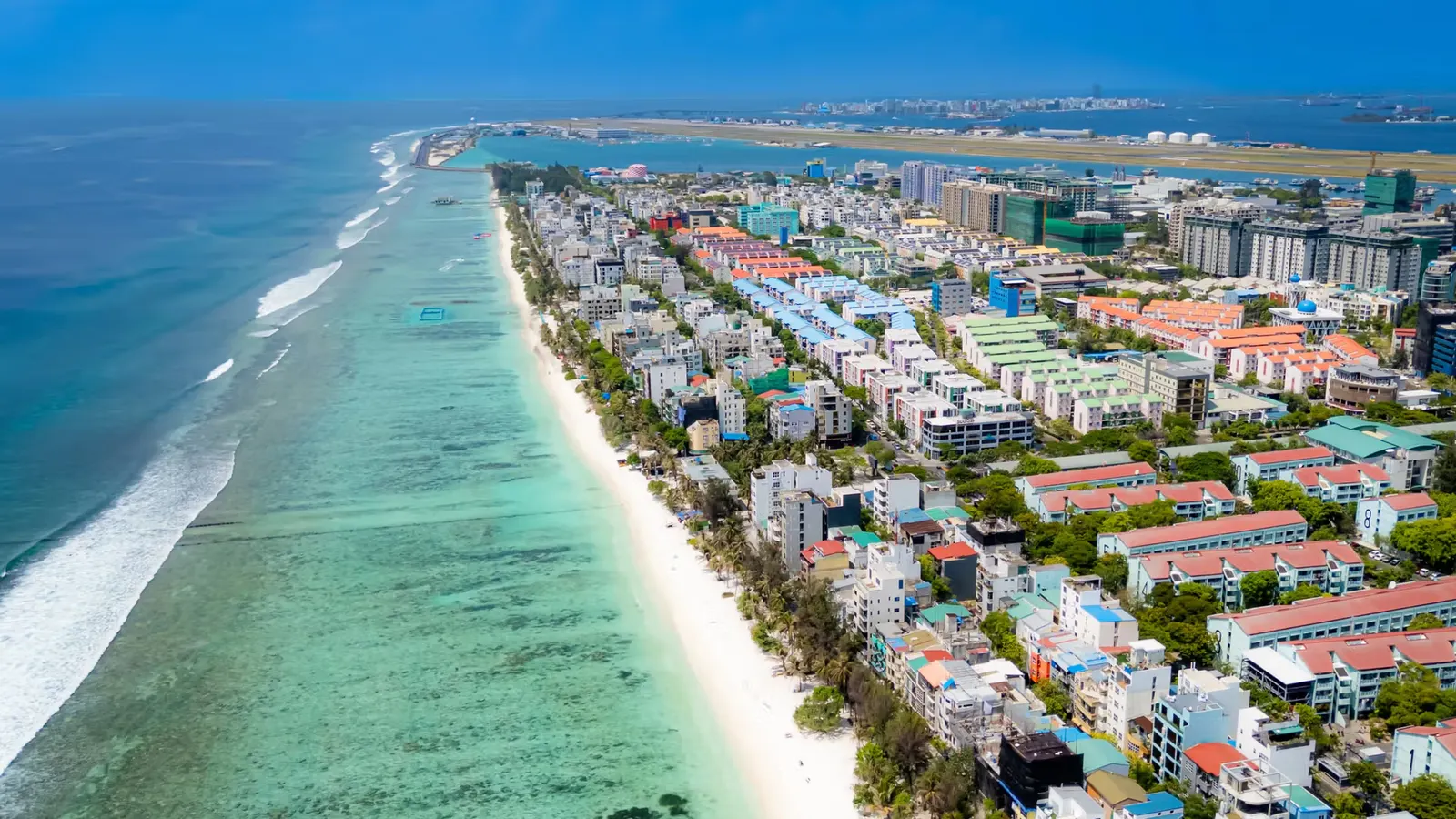
Hulhumalé is the Maldives' newest city: a large island reclaimed from the sea next to the airport, built to ease overcrowding in Malé. Today it's home to tens of thousands of people, with modern apartment towers, wide streets, parks and a long public beach. Visitors know it as the convenient place to stay before or after a flight; residents value its space and calm. This guide covers getting around, the beach, and life in Hulhumalé.
Where it is
Hulhumalé sits northeast of Velana International Airport on Hulhulé island, joined to it by road. The Sinamalé Bridge links the airport island to Malé, so Hulhumalé is connected to the capital by road. It's part of the Greater Malé area.
Phase 1 and Phase 2
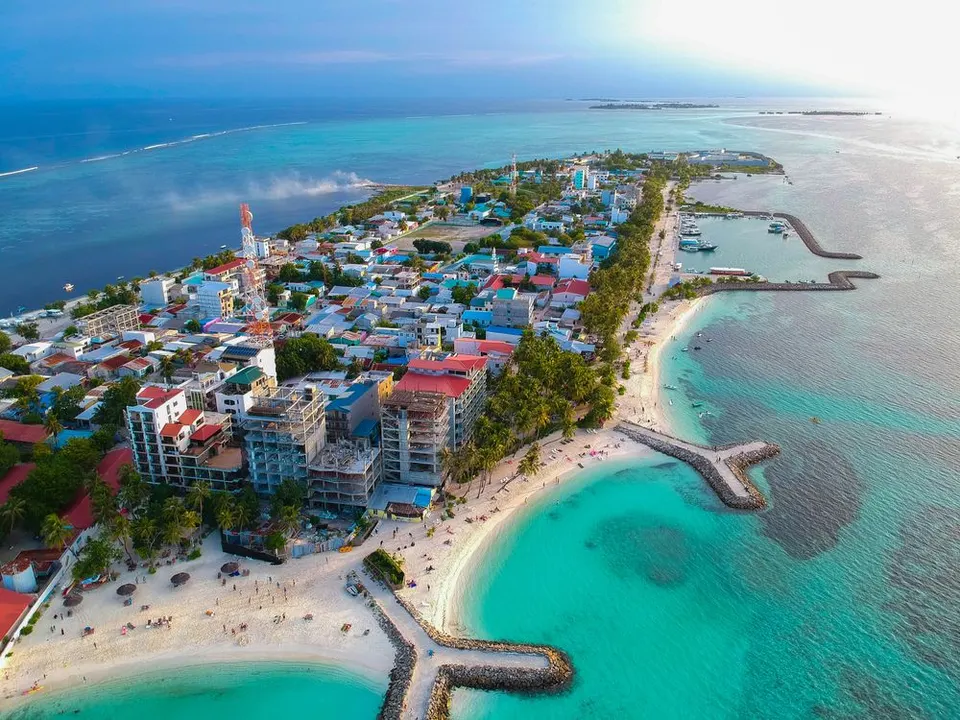
- Phase 1 is the older, established part, closer to the airport, with a mix of apartment blocks, hotels, shops, cafés and the main public beach.
- Phase 2 is the newer extension to the north, with large housing developments and continuing construction.
When booking accommodation or a taxi, always check which phase you need; taxi fares differ.
Getting around
Buses
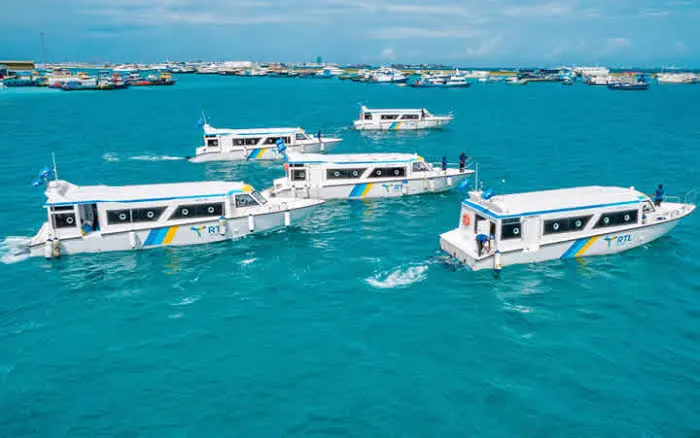
RTL runs city buses in Hulhumalé and between Hulhumalé, the airport and Malé. Buses are air-conditioned and cheap. Payment options reported include exact cash and contactless cards on the reader, as well as the RTL app. Check RTL's route map for current routes and frequencies.
Taxis
Taxi fares are regulated. Under the schedule set by the Ministry of Transport effective 20 May 2024:
| Trip | Fare |
|---|---|
| Within the zone (Malé, Hulhumalé, Hulhumalé Phase 2) | MVR 30 |
| Hulhumalé Phase 1 to Phase 2 | MVR 40 |
| Hulhumalé Phase 1 to Malé | MVR 85 |
| Hulhumalé Phase 2 to Malé | MVR 100 |
| Airport to Hulhumalé Phase 1 | MVR 80 |
| Airport to Hulhumalé Phase 2 | MVR 85 |
Check whether a newer schedule has been issued, as fares are revised from time to time.
Walking and cycling
Hulhumalé's wide, straight streets and lighter traffic make it much more pleasant than Malé for walking and cycling. Many residents cycle to the shops, the beach or the bus stop. Take water and shade breaks in the midday heat.
Scooters
Scooters are common, though less dominant than in Malé. Rules for foreigners getting licences and registering vehicles have been tightened; see our guide to driving licences and scooters.
The beach
Hulhumalé's long public beach, on the eastern side of Phase 1, is one of the best city beaches in the Maldives, with shallow water, shade trees and a waterfront lined with cafés. It's popular with local families, especially in the evenings and on weekends.
Because it's a public beach in a local community, local customs apply:
- swimwear should be modest; bikinis are not appropriate on the public beach;
- cover up when you leave the beach area;
- no alcohol; and
- keep the beach clean.
Some hotels offer guests access to areas or excursions where bikinis are allowed; ask your hotel.
Staying near the airport
Hulhumalé is the most convenient place to stay before an early flight or after a late arrival:
- it's only minutes from the airport by road;
- many small hotels and guesthouses offer airport pickups;
- you can relax on the beach and eat at local cafés; and
- it avoids the risk of missing a flight because of a delayed boat from a distant island.
Remember that the green tax applies to tourist accommodation here too: USD 6 per person per night at hotels and guesthouses with 50 or fewer rooms on inhabited islands, and USD 12 at larger ones. See our guide to the green tax.
Living in Hulhumalé
Many expatriate and Maldivian families choose Hulhumalé for:
- space: newer apartments, often larger than in Malé;
- open areas: parks, playgrounds and the beach;
- calmer streets and less traffic; and
- rents that are often lower than central Malé for comparable flats.
The trade-off is commuting time if you work in Malé, especially at peak hours on the bridge. See our guide to renting in Malé and Hulhumalé.
Getting to Hulhumalé from the airport
From the arrivals hall, Hulhumalé is a short drive. A regulated taxi costs MVR 80 to Phase 1 or MVR 85 to Phase 2 under the 2024 schedule, and RTL buses also connect the airport with Hulhumalé. Many hotels offer pickups, which are the easiest option after a long flight, especially late at night. See our guide to airport transfers.
Weather
Hulhumalé's open layout means more sun and less shade than narrow Malé streets. Carry water, wear a hat when walking or cycling in the middle of the day, and plan outdoor activities for the morning and evening. Sea breezes along the beachfront make evenings pleasant.
Services
Hulhumalé has supermarkets, local shops, cafés and restaurants, banks and ATMs, schools, mosques and a hospital, with more being built as the city grows. For some government offices and specialist services, you'll still need to go to Malé.
Eating out
The beachfront and the streets behind it have many cafés and restaurants, from local short eats and Maldivian fish dishes to international food. Evenings are the busiest time, when families come to the beach and cafés fill up. During Ramadan, most cafés close in the day and open after sunset. Prices are generally a little lower than at resorts, and there's no alcohol.
A day in Hulhumalé
- Morning: an early swim or walk along the beach before the heat builds.
- Midday: lunch at a local café, then shelter from the sun.
- Afternoon: cycle around Phase 1, or take the bus to Malé for sightseeing and shopping.
- Evening: back to the beachfront for sunset and dinner, when the city is at its liveliest.
For families
Hulhumalé is one of the most family-friendly places in the Greater Malé area, with parks, playgrounds, the shallow beach and space for children to ride bikes. Families moving to the Maldives often look here first for housing, and international and private schools serve the area and nearby Malé.
Day trips from Hulhumalé
From Hulhumalé, it's easy to reach Malé for sightseeing and shopping, or the airport jetty for speedboats to nearby islands and resorts. Some resorts near the airport sell day passes. See our guides to speedboat transfers and island hopping.
Tips
- Note whether your accommodation is in Phase 1 or Phase 2.
- Keep small rufiyaa notes for taxis and buses.
- Visit the beach in the early evening, when it's cooler and lively.
- Book airport pickups with your hotel for late arrivals.
- Allow extra time for trips to Malé at rush hour.
A city still growing
Hulhumalé continues to expand, with land reclamation, housing projects and new facilities. Expect construction in some areas, especially in Phase 2, and changes to roads and bus routes as the city develops. Check RTL's latest routes and ask locals about new facilities.
Common questions
How do I get from Hulhumalé to Malé?
By RTL bus or taxi over the Sinamalé Bridge. Under the 2024 taxi fare schedule, Malé to Hulhumalé Phase 1 costs MVR 85 and to Phase 2 MVR 100.
Can tourists swim at Hulhumalé beach?
Hulhumalé's public beach is used by local families, so modest swimwear is expected, and bikinis are not appropriate. Some hotels have arrangements for guests. Cover up when leaving the beach.
Is Hulhumalé good for a night before a flight?
Yes. It's minutes from the airport by road, with many small hotels that offer airport pickups.
Is Hulhumalé cheaper than Malé to live in?
Rents are often lower than in central Malé for comparable space, and flats are generally newer. Commuting to Malé adds time and cost.
Can I cycle in Hulhumalé?
Yes. Hulhumalé's wide streets and lighter traffic make it one of the best places in the Maldives for cycling. Some hotels and shops rent bicycles.
Which is better for a stopover, Phase 1 or Phase 2?
Phase 1 is closer to the airport and the main beach, with most hotels, cafés and shops, so it suits short stopovers. Phase 2 is newer and more residential.
Official sources
- The Edition: Transport Ministry sets new taxi fares
- Raajje Transport Link (RTL)
- PSM News: Hulhumalé Phase II housing
Last reviewed 2 November 2026. This guide is general information, not legal or financial advice. Rules change, so confirm with the official source before you apply. Report an error
Related guides
From our network
Visit Ras Malé
Independent, sourced guides to Ras Malé, the new city being built off Malé: progress, property, ferries and living there.
Read the Ras Malé guides ↗visitrasmale.com is run by the same team as HandyMaldives.