SIM cards, eSIMs and internet in the Maldives: Dhiraagu vs Ooredoo
The two mobile operators, tourist SIMs and eSIMs at the airport, what you need to register, home broadband for residents, coverage on islands and money-saving tips.
Quick answer
- The Maldives has two mobile operators: Dhiraagu and Ooredoo Maldives.
- Both sell tourist SIMs and eSIMs, including at Velana International Airport.
- You need your passport to register a SIM.
- Coverage is good across inhabited islands, with 4G widely available and 5G in Malé and some other areas.
Staying connected in the Maldives is easy. Two mobile operators cover the country, tourist SIMs and eSIMs are sold at the airport, and coverage reaches inhabited islands across the atolls. Whether you're visiting for a week or moving here for work, this guide explains your options for mobile data and home internet, and how to avoid paying more than you need to.
The two operators
Dhiraagu
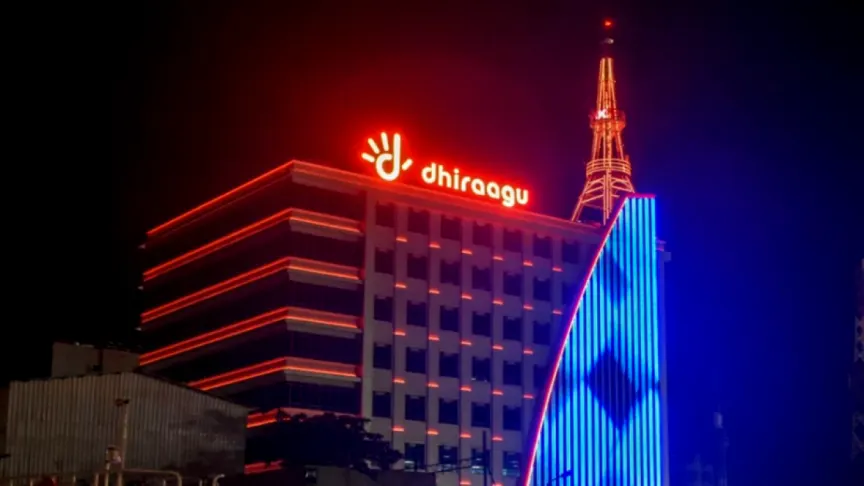
Dhiraagu is the longest-established and largest operator, with a large share of the market. It is often described as having the widest coverage across inhabited islands, and it provides mobile, home broadband and business services.
Ooredoo Maldives
Ooredoo Maldives is the second operator, part of the international Ooredoo group. It also offers mobile and home broadband services and competes closely with Dhiraagu on price and data allowances.
Both offer 4G widely across inhabited islands, and 5G in Malé and some other areas.
Tourist SIM cards
Both operators sell tourist SIM packages with a data allowance valid for a set number of days, plus some local calls. They are designed for visitors and are easy to buy.
Where to buy
- At Velana International Airport: both operators have counters or kiosks in or near the arrivals area. Dhiraagu has also offered self-service kiosks and a SIM vending option at the airport.
- In Malé and Hulhumalé: operator shops and authorised dealers.
- On local islands: partner shops sell SIMs and top-ups on many islands.
What you need
- your passport, for registration;
- an unlocked phone; and
- payment: prices are often quoted in US dollars for tourist plans, but paying in rufiyaa is fine.
Prices and allowances
Tourist plans are typically priced from around the equivalent of USD 20 for a week with a generous data allowance, with larger and longer packages costing more. Travel guides quote different prices and allowances, because operators update their packages regularly. Check current plans on the operators' websites or at the counter.
eSIMs
Both Dhiraagu and Ooredoo offer eSIM plans for tourists, which you can buy online before you travel or on arrival. The process typically involves:
- choosing a plan on the operator's website;
- uploading your passport details and, for some operators, verifying your identity with a selfie;
- paying online; and
- scanning the QR code to install the eSIM. You need a stable internet connection to install it, so do this on Wi-Fi.
Your phone must support eSIM and be unlocked. International eSIM resellers also sell Maldives data plans, but these are often more expensive than buying direct from the local operators, partly because they mainly offer large data packs.
SIMs for residents
If you're living in the Maldives, you'll want a regular prepaid or postpaid plan rather than a tourist package. Operators offer a range of monthly plans with data, calls and extras. Requirements for residents, such as presenting your work permit or residence documents, vary by operator and plan; visit an operator shop with your passport and work permit, and ask what is needed. A local number is useful for banking (one-time passwords), deliveries and government services.
Home internet
For home broadband, both operators offer fibre in many buildings in Malé and Hulhumalé, plus other options where fibre isn't available. When choosing a home:
- ask the landlord which provider has fibre in the building;
- check speeds and monthly data allowances on current plans; and
- ask about installation time and any setup fee.
On smaller islands, home broadband options may be more limited. Mobile data, sometimes through a portable router, is often the practical solution.
Coverage on islands and at sea
Coverage is good on inhabited islands, and both operators have invested heavily in reaching the atolls. Resorts generally have strong signals and Wi-Fi. Coverage can drop between islands at sea, on remote uninhabited islands and sandbanks, and in some parts of larger islands. If you're travelling to a remote atoll, ask locals which operator works best there.
Wi-Fi at resorts, guesthouses and cafés
Most resorts and guesthouses offer Wi-Fi, and many cafés in Malé and Hulhumalé do too. Speeds vary, particularly when many guests are online at once or on remote islands. If you need to work online, a local SIM or eSIM as backup is wise.
Working remotely
For remote workers, connectivity in Malé and Hulhumalé is generally good enough for video calls and everyday work. On local islands and in resorts, it is more variable. Before committing to a long stay, ask your accommodation for a speed test, and have mobile data as backup. Remember that visa rules apply: a tourist visa is not for working for Maldivian clients.
Your phone in daily life
Once you have a local number, your phone becomes the key to many everyday services in the Maldives:
- Banking: bank apps, such as Bank of Maldives' mobile banking, use your local number for security codes, so register it with your bank.
- Government services: eFaas, the government's digital identity system used by many online services, links to a phone number.
- Transport: the RTL app shows bus and ferry schedules and offers tickets on some routes.
- Messaging: messaging apps are widely used by businesses, guesthouses, landlords and boat operators to communicate and confirm bookings.
- Payments: the operators and banks offer mobile payment services. Ask which are accepted where you shop.
Checking coverage before you move to an island
If you are taking a job on an outer island or a resort, ask colleagues already there which operator has the better signal, and whether there is good indoor coverage in staff accommodation. Coverage can vary from one island to the next, and it is easier to choose the right operator from the start than to switch later.
If your SIM stops working
- check you have data allowance and validity remaining;
- restart the phone and check that mobile data and data roaming settings are correct for the local SIM;
- for an eSIM, make sure it is selected as the line for mobile data; and
- visit an operator shop with your passport if problems continue.
Money-saving tips
- Buy from the local operators rather than international eSIM resellers.
- Compare current packages: the operators change offers often.
- Choose validity to match your stay: don't pay for 30 days if you're staying for 7.
- Top up rather than buy a new SIM if you run out of data.
- Use Wi-Fi for large downloads and video streaming.
- Turn off international roaming on your home SIM to avoid surprise bills.
Tourist SIM or resident plan?
If you're visiting for a few weeks, a tourist package is the simplest choice: one payment, a fixed data allowance and no paperwork beyond your passport. If you're moving to the Maldives, a tourist SIM is fine for your first days, but switch to a regular prepaid or postpaid plan once your work permit is issued. Resident plans usually work out cheaper over time, let you keep the same number long term, and are better for linking to your bank and government services.
Calling home
International calls on a local SIM can be expensive. Most expats use internet-based calling and messaging apps over Wi-Fi or mobile data to stay in touch with family abroad. Check whether your plan includes enough data for regular video calls, or use home broadband for those.
Safety and scams
Be cautious of messages asking for one-time passwords or bank details; banks and operators won't ask for these by text. Keep your phone in a waterproof bag on boats. If your phone is lost or stolen, contact your operator quickly to block the SIM.
Quick comparison
| Dhiraagu | Ooredoo | |
|---|---|---|
| Tourist SIM at airport | Yes | Yes |
| Tourist eSIM | Yes | Yes |
| Coverage | Very wide; largest operator | Wide |
| Home fibre | In many Malé/Hulhumalé buildings | In many Malé/Hulhumalé buildings |
Check each operator's website for current plans and prices before buying.
Common questions
Which is better in the Maldives, Dhiraagu or Ooredoo?
Both offer good coverage on inhabited islands and in Malé. Dhiraagu is the larger operator and is often said to have the widest coverage. Compare current plans and ask locals which works best on the islands you'll visit.
Can I buy a SIM card at Malé airport?
Yes. Both operators have counters or kiosks at Velana International Airport. Bring your passport for registration.
Does my phone need to be unlocked?
Yes, to use a local SIM your phone must be unlocked. For an eSIM, your phone must also support eSIM.
Is Wi-Fi available at resorts and guesthouses?
Most resorts and guesthouses offer Wi-Fi, though speeds vary, especially on remote islands. A local SIM is a useful backup.
Official sources
Last reviewed 13 October 2026. This guide is general information, not legal or financial advice. Rules change, so confirm with the official source before you apply. Report an error