Island hopping in the Maldives on a budget: ferries, speedboats and planning
How to plan a multi-island trip using public ferries and shared speedboats: choosing islands, building a route around timetables, costs, weather and local island etiquette.
Quick answer
- Local islands with guesthouses make the Maldives affordable compared with resorts.
- Public ferries are cheapest but run on limited days; shared speedboats are faster and run more often.
- Build your route around the days boats run, and avoid relying on Friday ferries.
- Leave a buffer day in Malé or Hulhumalé before your international flight.
A Maldives holiday doesn't have to mean a single expensive resort. Since local islands opened to tourism, travellers can stay in guesthouses on inhabited islands, eat at local cafés and move between islands by public ferry and shared speedboat. Done well, island hopping shows you the real Maldives, from fishing villages to sandbanks, at a fraction of resort prices. This guide explains how to plan a trip that works with boat schedules rather than against them.
Why island hop?
- Cost: guesthouses on local islands are much cheaper than resorts, and the green tax is lower at small guesthouses on inhabited islands (USD 6 per person per night, compared with USD 12 at resorts).
- Variety: each island has its own character, and different islands give access to different reefs, sandbanks and wildlife.
- Local life: you'll see how Maldivians live, eat local food and support local businesses.
The trade-offs: local islands are dry (no alcohol), dress codes apply away from designated tourist beaches, and transport takes more planning.
Step 1: choose your area
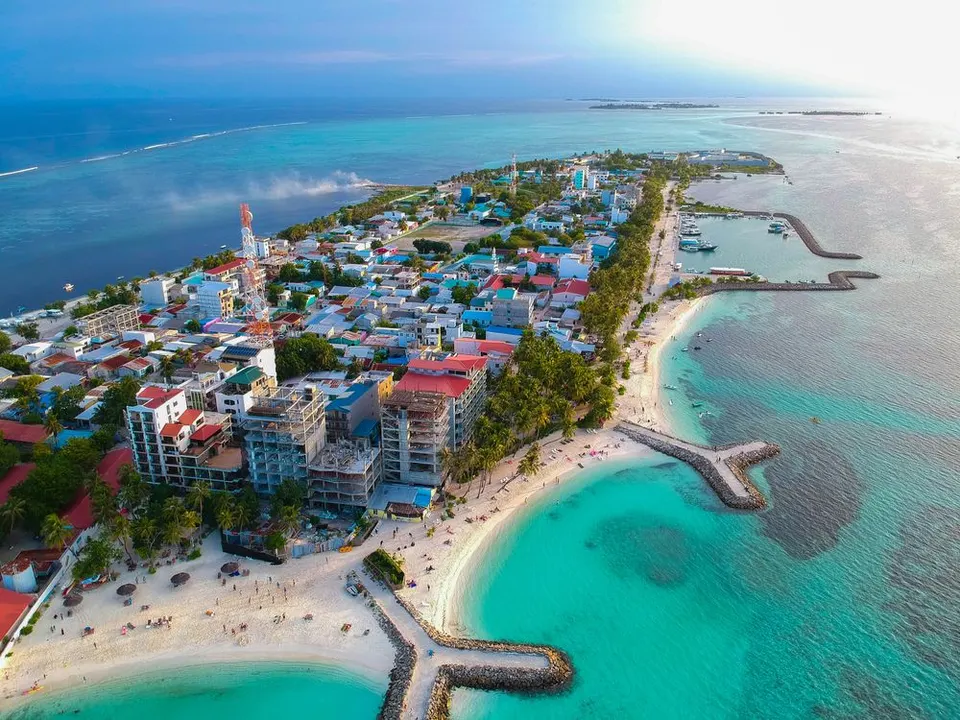
For a first trip, many travellers stay within the atolls near Malé, where transport is easiest. Kaafu Atoll (North and South Malé atolls) has several well-known guesthouse islands, including Maafushi, Guraidhoo, Gulhi, Thulusdhoo (known for surfing), Himmafushi and Dhiffushi. Alif Alif and Alif Dhaal (Ari Atoll) are known for whale sharks, manta rays and diving, and are reachable by ferry or speedboat from Malé. More distant atolls are rewarding but usually need domestic flights or long boat journeys.
Choose islands that are on the same ferry route or within easy speedboat reach of each other, so you don't have to return to Malé between every stop.
Step 2: understand the transport options
Public ferries
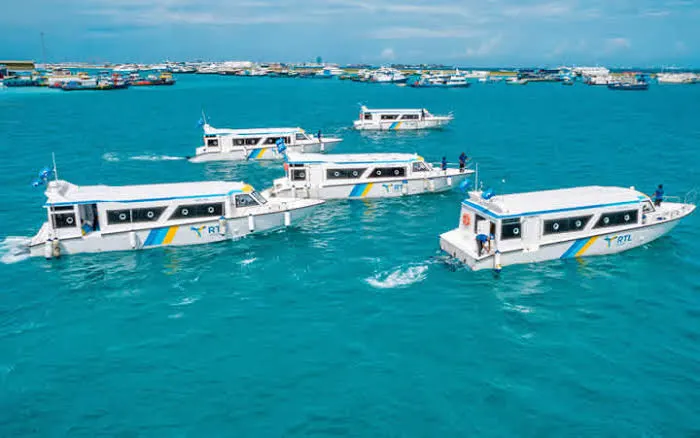
Run under the Raajje Transport Link (RTL) network, public ferries are the cheapest way to travel, often costing just a few dollars. But they are slow, and many routes run only on certain days, with most not running on Fridays. See our public ferry guide.
Shared speedboats
Scheduled shared speedboats connect Malé and the airport with popular guesthouse islands. They are much faster and run more often, but cost considerably more: for example, travel guides have reported around USD 25 to 30 per person for Malé to Maafushi.
Private speedboats
For groups, late arrivals or islands without convenient services, private charters offer flexibility at a higher price.
Domestic flights
For distant atolls, domestic flights save many hours of travel. See our guide to domestic flights.
Step 3: build your route around the timetable
This is the key to a smooth trip. Before booking guesthouses:
- Check the RTL schedule for each route you plan to use, noting which days it runs.
- Fix your travel days first, then book guesthouses around them.
- Ask guesthouses about speedboat options on days without ferries.
- Avoid Friday moves unless you're using a speedboat.
- Keep the last night near the airport (Malé or Hulhumalé) if your flight is early, or at least make sure the last boat leaves plenty of time.
A sample one-week itinerary
This example shows the planning approach; check current schedules before copying it.
- Day 1: arrive at Velana, take a shared speedboat from the airport jetty to a guesthouse island in South Malé Atoll.
- Days 2–3: snorkelling trip and a sandbank picnic.
- Day 4: move to a second island on a day when a ferry or speedboat connects them.
- Days 5–6: diving, a dolphin cruise or simply relaxing on the beach.
- Day 7: return to Hulhumalé for a final night near the airport, or straight to the airport for an evening flight.
Budgeting
When working out your budget, include:
- Accommodation: guesthouse rates vary by island and season.
- Taxes: tourism GST at 17% and the green tax per person per night (see our green tax guide), plus any service charge.
- Transport: ferries are cheap, speedboats much more.
- Excursions: snorkelling, diving, sandbank trips and resort day passes are where costs can climb.
- Food: local cafés are inexpensive; many guesthouses offer meal packages.
Ask guesthouses whether prices include taxes, transfers and meals, so you can compare like with like.
Weather and seasons
The northeast monsoon (roughly December to April) is generally drier and calmer, the peak season for visitors. The southwest monsoon (roughly May to October) brings more rain and wind, and rougher crossings, but lower prices and good surf. In any season, boats can be delayed or cancelled by bad weather, so keep your plans flexible and avoid same-day connections to international flights.
Local island etiquette
- Dress: cover shoulders and knees in the village. Swimwear is for designated tourist ("bikini") beaches and boats.
- Alcohol: not available or allowed on local islands. Some excursions visit resorts or licensed boats.
- Prayer times: some shops close briefly during prayers.
- Ramadan: don't eat, drink or smoke in public during daylight; guesthouses still serve their guests.
- Photos: ask before photographing people.
Our guide to local laws and customs has more detail.
Choosing guesthouses
Guesthouses range from family-run homes with a few rooms to small hotels. Good hosts make a big difference on an island-hopping trip, because they help with boat bookings, weather updates and excursions. When choosing, look for recent reviews mentioning helpful hosts, check whether transfers and taxes are included, and ask how far the guesthouse is from the jetty and the tourist beach.
Money on local islands
Larger guesthouse islands often have an ATM and some shops that take cards, but smaller islands may have neither, and ATMs can run out of cash. Carry enough rufiyaa for your stay, plus some US dollars, which guesthouses and excursion operators often accept. Paying in rufiyaa for local purchases is usually cheaper than paying in dollars.
Staying connected
Mobile coverage is good across inhabited islands, and most guesthouses have Wi-Fi, though speeds vary. A local SIM or eSIM from Dhiraagu or Ooredoo is useful for checking ferry times, messaging boat operators and using maps. See our guide to SIM cards and internet.
Packing for island hopping
- a sturdy, soft bag that can be handled on boats;
- a waterproof bag for passport, phone and cash;
- modest clothing for village areas, plus swimwear;
- reef-safe sunscreen, a hat and sunglasses;
- seasickness tablets if you need them;
- cash in rufiyaa, as smaller islands may have few ATMs.
Safety
Boat travel is part of daily life here, but take sensible precautions: don't board overcrowded boats, wear a life jacket where provided, follow crew instructions, and avoid travelling in very rough seas. For snorkelling and diving, use registered operators with proper safety equipment, and don't swim alone in channels with strong currents. Travel insurance covering medical evacuation is strongly recommended.
Travelling responsibly
Local islands depend on fragile reefs and limited fresh water, and many have small waste systems. You can help by refilling water bottles where guesthouses offer filtered water, taking your plastic waste back to Malé, never standing on or touching coral, and choosing excursion operators who don't feed or chase marine life. Spending money in local cafés and shops, rather than only on packages, also helps island communities benefit from tourism.
When plans change
Sooner or later a boat will be cancelled because of weather. When it happens, ask your guesthouse about speedboat alternatives, extend a night if needed, and keep your travel insurer's details handy. Building a little slack into the itinerary, such as one unplanned day, turns a cancellation from a crisis into an extra beach day.
Final tips
- Plan transport first, accommodation second.
- Confirm every boat the day before.
- Keep a buffer day before your flight home.
- Let your guesthouse hosts help: they know the boats, the weather and the best local trips.
Common questions
Is island hopping in the Maldives cheap?
It can be much cheaper than a resort holiday. Guesthouses on local islands cost far less than resorts, and public ferries cost only a few dollars. Speedboats, excursions and taxes add to the cost, so budget for those too.
How many islands can I visit in a week?
Two or three is comfortable. Each move takes most of a day once you allow for boat schedules, and you'll want time to enjoy each island.
Can I travel between atolls without going back to Malé?
Sometimes, but many routes radiate from Malé, so travelling between atolls often means returning to Malé or using a speedboat. Check routes before planning.
Is it safe to travel between islands by boat?
Boats are an everyday part of life in the Maldives. Check the weather, follow crew instructions, wear a life jacket where provided, and avoid travelling in very rough conditions.
Official sources
- Raajje Transport Link (RTL): ferry schedules
- MIRA: Green tax rates from 1 January 2025
- UK Foreign Travel Advice: Maldives local laws and customs
Last reviewed 13 October 2026. This guide is general information, not legal or financial advice. Rules change, so confirm with the official source before you apply. Report an error
Island hoppingBudget travelLocal islands