
Blog
The Art of Specialty Decorative Finishes

The Art of Specialty Decorative Finishes: Elevating Interior Surfaces Beyond Standard Paint
In the realm of high-end interior design, the walls of a room are frequently viewed as a blank canvas, awaiting more than just a uniform coat of color. While standard latex and acrylic paints provide a clean and functional finish, they often lack the depth, movement, and tactile allure required for truly bespoke environments. Specialty decorative finishes—ranging from ancient Venetian plasters to modern metallic glazes—represent the pinnacle of the painter’s craft. These finishes involve a sophisticated interplay of chemistry, light reflection, and manual dexterity. This article provides a comprehensive exploration of the most influential decorative finishes used in contemporary architecture, the rigorous technical processes required to apply them, and their impact on the perceived value of a property.
The Evolution of Faux and Decorative Arts
The practice of decorative painting is not a modern invention; it is a tradition that spans millennia. From the frescoes of Pompeii to the “Trompe l’oeil” (trick of the eye) masterpieces of the Renaissance, humans have long sought to use paint to imitate more expensive materials like marble, exotic woods, and gold leaf. Today, decorative finishing has evolved into a disciplined profession that combines these historical techniques with advanced synthetic resins and light-interfering pigments. The goal of a modern specialty finish is rarely to “deceive” the eye in a literal sense, but rather to create an atmosphere of luxury, history, and organic complexity that flat paint simply cannot achieve.
Venetian Plaster: The Timeless Elegance of Polished Stone
Perhaps the most prestigious of all decorative finishes is Venetian plaster. Authentic Venetian plaster is a lime-based product made from fired limestone mixed with ground marble dust. When applied in multiple paper-thin layers and then “burnished” with a stainless steel trowel, the friction creates a chemical reaction that turns the lime back into stone. The result is a surface that is hard as marble, cool to the touch, and possesses a translucent depth that appears to be lit from within.
The application of Venetian plaster is a physically demanding and highly technical process. It requires a “perfect” substrate; any bump or dip in the drywall will be magnified by the reflective nature of the plaster. Each layer must be allowed to dry partially before the next is applied, and the final burnishing stage requires a level of precision that only years of experience can provide. Because it is naturally high in pH, authentic lime plaster is also antimicrobial and breathable, making it as healthy for the indoor environment as it is beautiful.
The Sophistication of Metallic and Iridescent Coatings
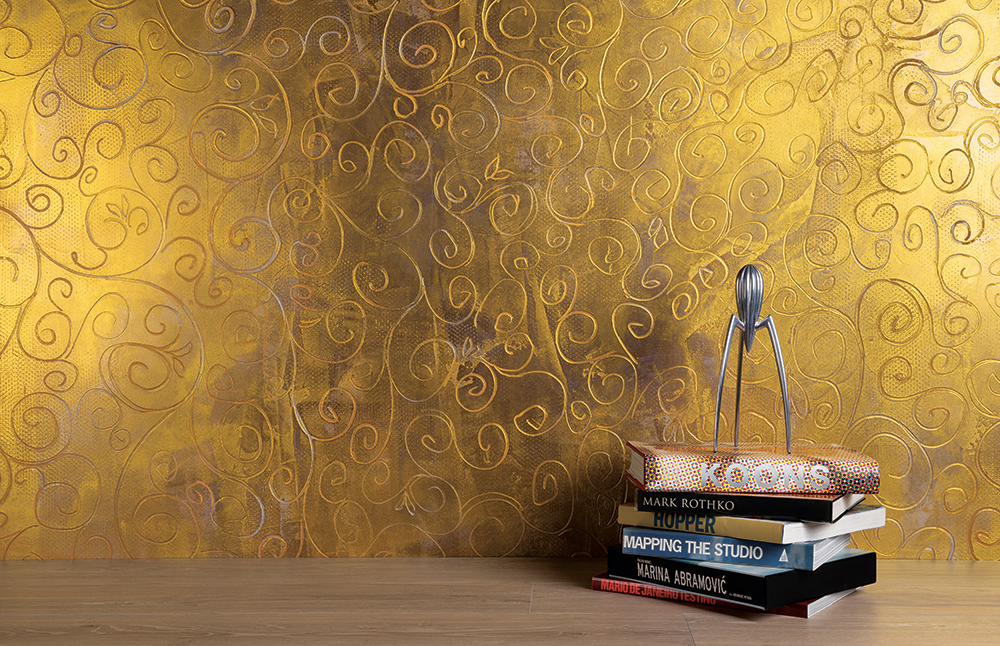
For modern and industrial-themed interiors, metallic finishes have become a staple. These are not merely “sparkly” paints; they are high-performance coatings infused with real metallic particles or mica flakes. When light hits a metallic-finished wall, it is reflected at different angles, creating a shimmering effect that changes as one moves through the room. These finishes are particularly effective on textured surfaces, such as “linen” or “striae” finishes, where the metal highlights the peaks and valleys of the texture.
Working with metallic paints presents unique challenges. Unlike standard paint, metallics have “directionality.” If a brush or roller moves in different directions, the metallic flakes will lay down differently, creating visible streaks known as “lapping.” Professionals often apply these coatings using HVLP (High-Volume, Low-Pressure) sprayers or specialized “cross-hatch” brushing techniques to ensure a uniform distribution of the shimmer. A final protective clear coat is often applied to prevent the metal particles from oxidizing or tarnishing over time.
Faux Graining and Marbling: Imitating Nature
The art of “Faux Bois” (fake wood) and “Faux Marbre” (fake marble) remains a vital part of the finisher’s repertoire, especially in restoration work. These techniques involve the use of “glazes”—translucent coatings that have a long “open time,” allowing the artist to manipulate them before they dry. Using a variety of specialized tools, such as badger-hair brushes, sea sponges, and even feathers, the finisher replicates the intricate veins of Carrara marble or the complex growth rings of Walnut wood.
While digital printing has made “fake” materials more accessible, a hand-painted faux finish possesses a depth and soul that a printed image lacks. A professional grainer understands the “geology” of stone and the “botany” of wood, ensuring that the patterns follow the logical flow of a real material. This is often used on architectural elements like columns, mantels, and heavy doors where using real stone or rare timber would be structurally or financially prohibitive.
Textured Glazing: Striae, Sponging, and Ragging
Glazing is a versatile technique that adds “visual texture” to a wall without necessarily adding physical thickness. **Striae** involves pulling a stiff-bristled brush through a wet glaze to create fine, vertical lines that mimic the look of expensive silk wallpaper. **Sponging** and **Ragging** involve dabbing a surface with natural sea sponges or lint-free cloths to create a soft, mottled effect reminiscent of old-world parchment. These finishes are excellent for hiding minor wall imperfections and adding a sense of warmth and “age” to a room. The key to a professional glaze finish is the “seamlessness” of the application; in a large room, multiple painters must work in tandem to maintain a “wet edge,” ensuring that no visible lines appear where one section ends and another begins.
Trompe l’oeil and Architectural Illusions
Trompe l’oeil is the most advanced form of decorative painting, requiring the skills of a fine artist. It involves creating three-dimensional illusions on flat surfaces. This might include painting “shadows” under a crown molding that doesn’t exist, or painting a “window” onto a solid wall that looks out over a Mediterranean landscape. In modern design, this is often used subtly—for example, painting “architectural panels” on a flat wall to give a room a more classical, structured feel. This requires an absolute mastery of perspective, light, and shadow to ensure the illusion holds up from multiple viewing angles within the room.
The Technical Importance of Priming and Base-Coating
A decorative finish is only as stable as the layers beneath it. Because many specialty finishes involve heavy manipulation or moisture-heavy glazes, the base coat must be high-quality and fully cured. For metallic finishes, the base coat color is critical; a gold metallic finish, for example, will appear much richer if applied over a deep ochre base coat rather than a white one. For Venetian plaster, a specialized “mineral primer” containing fine sand is often required to provide the “tooth” necessary for the plaster to bond to the smooth drywall.
The Role of Waxes and Topcoats in Finishing
Many decorative finishes require a final “seal” to protect the artistry. For Venetian plaster, this is often a natural beeswax or a synthetic “cera” that is buffed into the surface to increase the gloss and provide water resistance. For glazed or faux finishes, a “dead flat” or “satin” varnish is used to protect the delicate layers of paint from scuffs and UV fading. Selecting the right topcoat is a balance of aesthetics and durability; a kitchen accent wall requires a much more robust protective layer than a decorative ceiling in a formal dining room.
Safety and Material Integrity
Modern decorative finishing has moved away from the toxic lead-based pigments and harsh solvents of the past. Today’s artisans primarily use water-based acrylic glazes and natural lime plasters that are low in VOCs and safe for residential use. However, working with lime-based products requires safety precautions, as wet lime is caustic and can cause skin and eye irritation. Professionals use appropriate personal protective equipment (PPE) and ensure that the workspace is properly ventilated to allow the various layers of glaze and plaster to dry at the correct rate.
Why Invest in Specialty Finishes?
From an economic standpoint, specialty finishes provide a significant Return on Investment (ROI). They transform a room from a standard living space into a “designer” space. In the luxury real estate market, a professionally applied Venetian plaster hallway or a metallic-finished master suite serves as a unique selling point that justifies a higher asking price. Beyond the financial aspect, these finishes improve the acoustic properties of a room (especially thicker plasters) and offer a level of durability that far exceeds standard paint. A well-maintained Venetian plaster wall can last for decades, becoming more beautiful as it “ages” and develops a natural patina.
The Future of Decorative Finishing: Digital Meets Artisanal
As we look toward the future, the industry is seeing an integration of digital technology and traditional craft. Some finishers are now using laser-cut stencils for incredibly intricate “mandala” designs, or using 3D-mapping to plan complex murals. However, the core of the discipline remains the human hand. The subtle “imperfections” and the “movement” created by a human artist are what give decorative finishes their value. In an increasingly digital and mass-produced world, the demand for “bespoke” surfaces—walls that show the mark of a master craftsman—is higher than ever before.
Conclusion
Specialty decorative finishes represent the intersection of architectural necessity and artistic expression. By utilizing materials like lime, marble dust, and metallic resins, and employing techniques that have been refined over centuries, professional finishers can elevate any interior to a realm of unparalleled luxury. These finishes provide more than just color; they provide texture, light, and a sense of history. Whether it is the cool, polished touch of a Venetian plaster wall or the shimmering movement of a metallic glaze, specialty finishes ensure that the interior environment is not just a place to live, but a masterpiece to be experienced. Investing in decorative finishing is an investment in the enduring beauty and structural character of the home.