Money in the Maldives for visitors: rufiyaa, US dollars, cards and ATMs
Do you need rufiyaa or dollars? How the exchange rate works, where to get cash, using cards at resorts and on local islands, and tips to avoid losing money on exchange.
Quick answer
- The local currency is the Maldivian rufiyaa (MVR), officially pegged at around MVR 15.4 to USD 1.
- Resorts price in US dollars and take cards; local islands and Malé use rufiyaa for everyday purchases.
- ATMs are easy to find in Malé and Hulhumalé but scarce on small islands, so carry cash when island hopping.
- Bring clean, undamaged US dollar notes; worn or old notes may be refused.
Money in the Maldives can be confusing for first-time visitors. Resorts quote prices in US dollars, local cafés in rufiyaa, and the official and street exchange rates differ. Card acceptance varies hugely between a five-star resort and a small guesthouse island. This guide explains what currency to use where, how to get cash, and how to avoid losing money on exchange.
The Maldivian rufiyaa
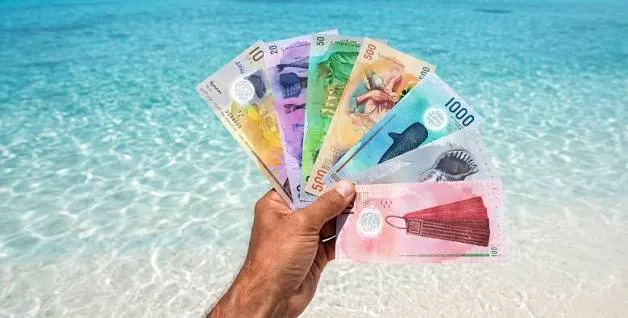
The local currency is the Maldivian rufiyaa (MVR), divided into 100 laari. Notes come in denominations from MVR 5 up to MVR 1,000, and coins are used for small amounts. Prices are often written as "MVR" or "Rf".
The exchange rate
The rufiyaa is officially pegged to the US dollar at around MVR 15.4 per USD (often quoted as 15.42). For quick mental arithmetic, many visitors use about 15 rufiyaa to the dollar. Because of a long-running shortage of US dollars in the country, an unofficial rate significantly weaker than the official one has existed, but as a visitor you should exchange money only through banks and licensed money changers.
Where each currency is used
Resorts
Resorts price almost everything in US dollars and settle bills by credit or debit card, usually at checkout. You'll rarely need rufiyaa at a resort. Major cards are widely accepted at four- and five-star resorts.
Malé and Hulhumalé
Everyday prices in shops, cafés, taxis and buses are in rufiyaa. Cards are accepted in many supermarkets, restaurants and larger shops, but you'll want rufiyaa for taxis, small cafés and markets.
Local islands and guesthouses
Guesthouses often quote rooms and excursions in US dollars and may accept cards, sometimes with a fee. Local cafés, shops and ferries generally use rufiyaa, and many small businesses take cash only. Some islands have no ATM at all.
US dollars: what to bring
US dollars are widely accepted in tourist businesses, and many visitors bring some cash. A few tips:
- Bring clean, undamaged notes. Banks may refuse old-style, damaged or heavily worn US notes.
- Bring a mix of denominations. Small notes are useful for tips; note that some businesses offer a lower rate for USD 1 and USD 5 notes when converting.
- Expect change in rufiyaa. When you pay in dollars at local businesses, change is usually given in rufiyaa.
- Don't bring huge amounts. Cards and ATMs cover most needs in Malé and at resorts.
Getting cash
At the airport
The Bank of Maldives foreign exchange counter in the arrivals hall at Velana International Airport exchanges major currencies, and there are ATMs at the airport. This is a convenient place to get some rufiyaa on arrival.
ATMs
ATMs are easy to find in Malé and Hulhumalé and available on many larger islands. On smaller islands, ATMs may be few, out of service or out of cash. Your home bank may charge fees for overseas withdrawals, and the local bank may add its own charge. Banks have also placed limits on foreign currency withdrawals at times during the dollar shortage.
Banks and money changers
Banks in Malé and Hulhumalé exchange currency during opening hours (remember most offices close on Fridays). Use banks or licensed money changers rather than informal street exchange, which carries legal risks under the country's foreign currency rules.
Cards
- Visa and Mastercard are the most widely accepted; American Express less so outside resorts.
- Contactless payment is increasingly common in Malé and Hulhumalé, including on some buses.
- Card fees: some guesthouses and small businesses add a surcharge for card payments.
- Currency choice: if a card terminal offers to charge you in your home currency, it's usually cheaper to choose the local currency (dynamic currency conversion rates are often poor).
- Tell your bank you're travelling, so your card isn't blocked for unusual activity.
Prices and taxes
When comparing prices, check whether they include taxes and charges. Tourism services carry tourism GST at 17%, many businesses add a 10% service charge, and accommodation adds the green tax per person per night. A price "plus taxes" can be considerably higher than the headline figure. See our guides to GST, the green tax and tipping and service charge.
Budgeting on a local island
If you're staying in guesthouses, plan your cash needs before you leave Malé:
- check whether your island has an ATM, and whether your guesthouse accepts cards;
- carry enough rufiyaa for local cafés, shops and ferries;
- carry some US dollars for excursions and guesthouse bills if cards aren't accepted; and
- keep cash in a waterproof bag on boats.
Travel money cards and digital wallets
Prepaid travel money cards and multi-currency cards from your home country can work well in the Maldives, especially if they let you hold US dollars and avoid conversion fees. Check that the card is accepted internationally and what it charges for ATM withdrawals. Phone wallets can be used for contactless payments where terminals accept them, mostly in Malé, Hulhumalé and resorts, but don't rely on them on local islands.
Safety
The Maldives is generally safe, but take normal precautions. Use guesthouse or hotel safes, don't carry large amounts of cash around, and keep cards and cash separately in case one is lost. Be careful with ATMs in quiet areas at night, and cover your PIN.
Common money mistakes
- Arriving on a local island with no cash, assuming there will be an ATM.
- Bringing torn or old US notes that nobody will accept.
- Choosing to pay in your home currency on card terminals, which usually costs more.
- Forgetting taxes when comparing excursion and room prices.
- Exchanging all your money at once and ending up with rufiyaa you can't use at home.
- Using informal money changers, which can breach currency rules.
Paying for excursions and transfers
Speedboat transfers, diving and excursions are often the biggest costs after accommodation, and are commonly priced in US dollars. Ask in advance how you can pay: some operators take cards, others prefer cash. Get a receipt, and check whether taxes are included. If you're booking through your guesthouse, you may be able to add excursions to your room bill and pay by card at the end.
Leaving the Maldives
Try to spend or exchange your rufiyaa before you leave, as it can be difficult to exchange outside the country. The airport has shops and cafés where you can use up small amounts. Keep receipts from exchanges in case you need to show where your money came from.
Quick summary
| Where | Best way to pay |
|---|---|
| Resorts | Card (bills in USD) |
| Malé and Hulhumalé shops, restaurants | Card or rufiyaa |
| Taxis, buses, ferries, small cafés | Rufiyaa cash (some buses take contactless) |
| Guesthouses and excursions | USD cash or card (check fees) |
| Local island shops | Rufiyaa cash |
For people moving here
If you're relocating rather than visiting, you'll want a local bank account for your salary and everyday spending. See our guide to banking for expats, which also explains limits on sending money abroad.
Checklist before you travel
- Tell your bank you're travelling; check overseas fees.
- Bring at least one card that works abroad, plus a backup.
- Bring some clean US dollar notes in mixed denominations.
- Plan to get rufiyaa at the airport if you're heading to local islands.
- Check whether your island has an ATM and whether your guesthouse takes cards.
Common questions
Should I bring US dollars or rufiyaa to the Maldives?
For a resort holiday, US dollars and a card are usually enough. If you're staying on local islands, bring some US dollars and get rufiyaa for small purchases, local cafés and public transport.
Can I use my credit card in the Maldives?
Yes at resorts, larger hotels and many shops in Malé and Hulhumalé. Smaller guesthouses and shops on local islands may only accept cash, or charge a fee for cards.
Where can I exchange money?
At the Bank of Maldives foreign exchange counter in the airport arrivals hall, at banks in Malé and Hulhumalé, and at licensed money changers. Avoid informal street exchange.
Will I get change in dollars?
Often not. When you pay in US dollars at local businesses, change is commonly given in rufiyaa.
Are there ATMs on local islands?
Larger islands often have at least one ATM, but many smaller islands have none, and ATMs can run out of cash. Withdraw enough in Malé or at the airport before travelling to a local island.
Official sources
- The Edition: Using money in the Maldives as a traveller
- Bamboo Travel: Currency, credit cards and changing money in the Maldives
- U.S. State Department: 2026 Investment Climate Statement (exchange rate)
Last reviewed 19 October 2026. This guide is general information, not legal or financial advice. Rules change, so confirm with the official source before you apply. Report an error