Banking in the Maldives for expats: opening an account and sending money home
How expats open a bank account, what the dollar shortage means for transfers, recent remittance limits, the official and market exchange rates, and practical tips.
Quick answer
- Bank of Maldives offers expatriate accounts in MVR, USD and other currencies; work visa holders need a valid work permit.
- Banks typically ask for your passport, work permit or visa, and an employer letter confirming your salary.
- A shortage of US dollars has led banks to limit transfers abroad, especially from rufiyaa accounts.
- Remittance limits change often, so check your own bank's current limits before relying on them.
A local bank account makes life in the Maldives much easier: receiving your salary, paying rent, using cards and mobile banking, and sending money to your family. But banking here has a particular challenge that newcomers need to understand: a long-running shortage of US dollars, which affects how easily you can send money abroad. This guide explains how to open an account, what the dollar situation means in practice, and how to manage your money sensibly.
Banks in the Maldives
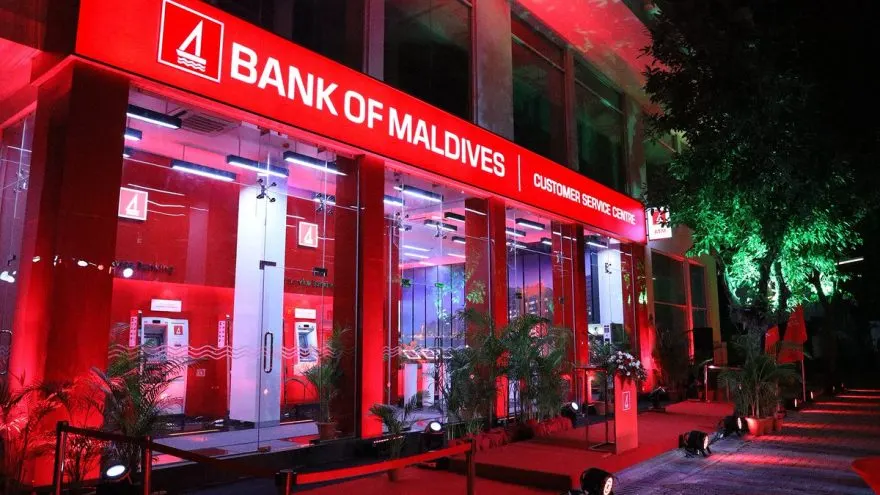
The largest bank is Bank of Maldives (BML), which is majority state-owned and has the widest branch and ATM network across the islands. Several other banks operate in the country, including branches of foreign banks such as State Bank of India (SBI), Bank of Ceylon, Habib Bank and others, plus Islamic banking options. Many expatriates bank with BML because of its network, while some use a branch of a bank from their home country to make transfers home simpler.
Opening an expatriate account at BML
Bank of Maldives offers a dedicated expatriate account. Based on BML's published information:
- Eligibility: expats with a work visa need a work permit with at least one month of validity remaining when they open the account; other expats need a valid visa. (An older BML checklist set stricter permit validity requirements, so confirm the current rule with the bank.)
- Currencies: the expatriate current account is offered in MVR, USD, INR, CNY and EUR.
- Minimum deposit: BML lists minimums such as MVR 200 or USD 50, with a monthly maintenance fee on the USD account. Check the current fees.
- Opening: you can start the application online; in Malé you may need to book an appointment at the account opening centre, while outside Malé forms go to a branch. BML says it usually takes up to five working days if all documents are in order.
Documents to bring
- your passport (original for verification);
- your work permit or visa;
- a letter from your employer confirming your employment and salary;
- your address details in the Maldives; and
- passport-size photographs, if requested.
Understanding the dollar shortage
The Maldivian rufiyaa (MVR) is officially pegged to the US dollar at around MVR 15.4 to USD 1. The country earns most of its foreign currency from tourism, while it imports almost everything it consumes, from food to fuel. For several years, demand for dollars has been greater than supply. The U.S. State Department's 2026 review notes that capital controls continue under the Foreign Currency Act and the Maldives Monetary Authority (MMA), and that the processing and timing of transfers depends on banks' own policies. It also notes an unofficial exchange rate that has been significantly weaker than the official one, around MVR 18 to 20 per dollar.
In practice, this means banks ration dollars, and transfers abroad, especially from rufiyaa, are limited.
Recent remittance limits
Banks have set their own limits on how much customers can send abroad, and these have changed repeatedly. Examples reported in 2025 and 2026 include:
- State Bank of India (SBI) reduced outward remittances to USD 150 per month per account holder for rufiyaa accounts from 25 October 2025, while transfers from dollar accounts were reported as unaffected. Indian expats had previously been able to send considerably more.
- Habib Bank was reported to have reduced its monthly remittance ceiling from USD 1,000 to USD 300.
- Bank of Maldives was reported to have limited ATM withdrawals in foreign currency to USD 3,500 per month from September 2026.
These are examples, not a complete or permanent list. Ask your bank for its current limits before making plans that depend on sending a particular amount home each month.
Salary in dollars or rufiyaa?
Many tourism-sector jobs pay salaries in US dollars, while jobs in other sectors are often paid in rufiyaa. Because dollar accounts have generally faced fewer restrictions than rufiyaa accounts when sending money abroad, the currency of your salary matters. When negotiating a job offer, ask:
- Which currency will my salary be paid in?
- Can part of it be paid in US dollars?
- Does the employer help staff with remittances?
Using foreign currency legally
The MMA's rules limit when transactions can be made in foreign currency within the Maldives. Under rules introduced in October 2024, transactions in foreign currency outside the permitted categories can attract fines ranging from MVR 10,000 to MVR 1 million. Rent, for example, may be quoted in dollars by some landlords, but paying in foreign currency outside the rules can put both parties at risk. Use banks and licensed money changers, and ask for rufiyaa pricing where the rules require it.
Practical tips for managing money
- Open your account early. Start as soon as your work permit is issued, as your employer may need your account details for payroll.
- Keep your permit valid. Banks check permit validity when opening and maintaining expatriate accounts.
- Consider a USD account alongside your MVR account if you are paid in dollars or receive dollars.
- Plan transfers. If your bank has monthly limits, send money regularly rather than saving up large amounts to send at once.
- Use official channels. Informal money transfer arrangements may seem convenient, but they carry legal and fraud risks.
- Use cards and mobile banking. Local card payments and BML's mobile banking are widely used in Malé and Hulhumalé, reducing the need to carry cash.
- Keep records of salary payments and transfers.
Cash and cards
Rufiyaa is used for everyday purchases on local islands and in Malé. US dollars are widely accepted at resorts and for tourist services. ATMs are common in Malé and Hulhumalé and available on many larger islands, but smaller islands may have limited or no ATMs, so carry enough cash when travelling. Foreign cards generally work at ATMs and larger shops, though fees apply.
Choosing a bank: questions to ask
- Which currencies can I hold, and what are the minimum balances and monthly fees?
- What is the current monthly limit for transfers abroad from MVR and USD accounts?
- What fee is charged for an international transfer, and how long does it take?
- Is there a debit card that works abroad and online? What are the foreign usage fees?
- How good is the mobile app, and can I pay bills and transfer to other local banks through it?
- How many branches and ATMs are there near where I live and work, and on the islands I visit?
Many expats keep an account with BML for everyday use in the Maldives and, where helpful, an account with a branch of a bank from their home country for transfers home. Compare the actual limits and fees rather than assuming one bank is always better.
Paying bills and rent
Utility bills, phone bills and many services can be paid through bank apps or online. For rent, ask your landlord for bank transfer details and keep the transfer records as proof of payment; this is far safer than paying cash. If a landlord insists on payment in US dollars, remember the MMA's rules on foreign currency transactions and ask whether rufiyaa can be accepted.
Help from your embassy
Because the dollar shortage particularly affects workers sending money to their families, several embassies and high commissions, including those of Bangladesh and India, have engaged with Maldivian banks and authorities on remittance arrangements. If you are struggling to send money home, your embassy may have current information on available options.
Leaving the Maldives
Before you leave for good, plan how you will move your savings. Given transfer limits, this can take time, so start early. Close or keep your accounts deliberately, settle any outstanding card balances, and make sure your final salary and end-of-service payments have been received.
Check the latest
Banking rules and limits in the Maldives have changed many times during the dollar shortage. The figures in this guide are from published reports at the time of writing. Confirm current requirements and limits directly with your bank before relying on them.
Common questions
Can a foreigner open a bank account in the Maldives?
Yes. Foreigners with a valid visa can open accounts. Bank of Maldives offers a dedicated expatriate account; work visa holders need a work permit with remaining validity, and banks ask for supporting documents such as an employer letter.
Should I get paid in dollars or rufiyaa?
If you need to send money abroad regularly, being paid in US dollars, or holding a USD account, has generally made transfers easier during the dollar shortage. Many salaries outside tourism are paid in rufiyaa, so discuss this with your employer.
Is it legal to change money on the street?
Use banks and licensed money changers. Foreign currency rules are enforced by the Maldives Monetary Authority, and transactions outside the permitted channels can lead to fines.
How long does it take to open an account?
Bank of Maldives says new accounts usually take up to five working days if all documents are in order.
Official sources
- Bank of Maldives: Expatriate account
- Bank of Maldives: Account opening checklist
- U.S. State Department: 2026 Investment Climate Statement, Maldives
- Onmanorama: SBI caps remittances from Maldives at USD 150
Last reviewed 13 October 2026. This guide is general information, not legal or financial advice. Rules change, so confirm with the official source before you apply. Report an error