
Blog
Basement Waterproofing And Foundation Protection

Basement Waterproofing and Foundation Protection: A Comprehensive Engineering Strategy
The foundation of a building is more than just a base; it is the structural anchor that maintains the equilibrium of the entire edifice. However, because foundations are buried within the earth, they exist in a state of constant vulnerability. They are subjected to the weight of the structure from above and the relentless, shifting pressures of the soil and groundwater from below. Basement waterproofing and foundation protection are not merely about preventing a “wet floor”; they are about defending the very core of a property against the destructive power of moisture. This article examines the technical methodologies used to secure basements and foundations, ensuring they remain dry, stable, and structurally sound for decades.
The Physics of Foundation Failure: Hydrostatic Pressure
To solve the problem of a wet basement, one must first understand the physics of the surrounding soil. When heavy rain or snowmelt occurs, the soil surrounding a foundation becomes saturated. This creates “hydrostatic pressure”—the force exerted by standing water against the vertical walls and the horizontal floor slab of a basement. Because concrete is a porous material composed of a network of microscopic capillaries, this pressure eventually forces liquid water through the wall. Even if the water does not flow into the basement in a visible stream, it can migrate as water vapor, leading to a high-humidity environment that fosters mold and structural decay.
Exterior Waterproofing: The “Positive Side” Defense
Professional engineers generally agree that “positive side” waterproofing—stopping the water before it ever touches the foundation—is the most effective strategy. This process is labor-intensive and requires significant excavation around the perimeter of the home down to the level of the footings. Once the foundation walls are exposed and cleaned, a multi-layered defense system is applied:
- Structural Repair: Any existing cracks are filled with high-strength hydraulic cement or epoxy.
- Primary Membrane: A thick, flexible coating, often a polymer-modified bitumen or liquid rubber, is applied. This creates a seamless, impermeable skin over the concrete.
- Protection Board: A rigid insulation or heavy-duty board is installed over the membrane to protect it from being punctured by rocks during the backfilling process.
- Drainage Mat: Also known as a “dimple board,” this provides a vertical path for water to fall quickly to the drainage system at the base of the wall, preventing hydrostatic pressure from building up.
The Critical Role of the French Drain (Weeping Tile)
Exterior waterproofing is incomplete without a functional drainage system. A “French drain” consists of a perforated pipe installed alongside the foundation footing, surrounded by a bed of washed gravel and wrapped in a geotextile filter fabric. This system acts as a relief valve for groundwater. As the water table rises, the water enters the pipe through the perforations and is carried away by gravity or directed into a sump pit, ensuring that water never sits against the foundation long enough to penetrate the walls.
Interior Waterproofing: The “Negative Side” Solution
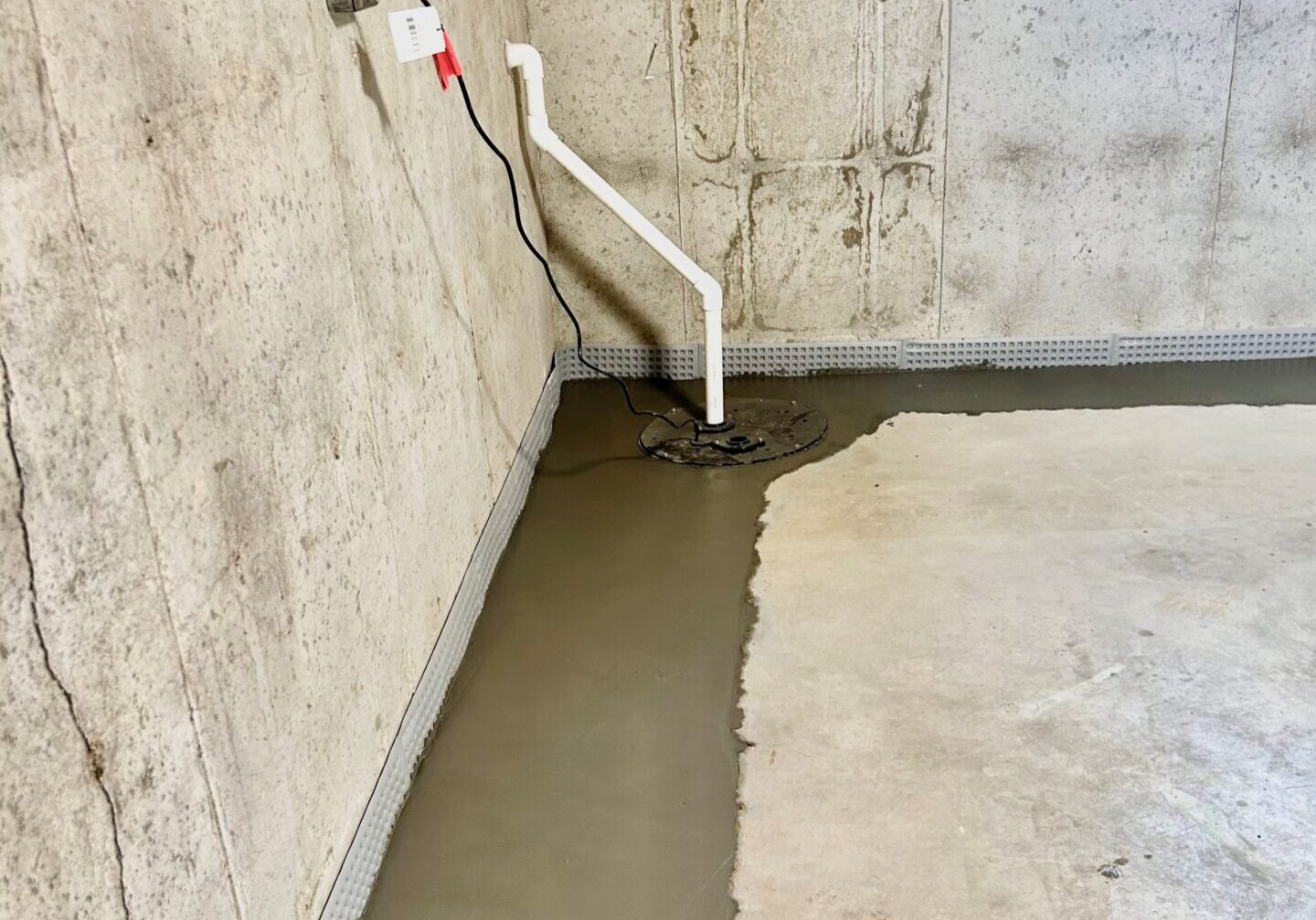
In many urban environments or established properties, exterior excavation is impossible due to proximity to other buildings, landscaping, or paved areas. In these cases, an interior waterproofing system is employed. While this method technically allows water to reach the wall, it manages the water so it never enters the living space. This usually involves cutting a trench into the perimeter of the concrete floor slab, installing an interior drainage pipe, and covering it with a specialized “wall flange” that captures water seeping through or down the walls. This water is then channeled into a high-capacity sump pump system.
Sump Pump Systems: The Heart of the Basement
The sump pump is the mechanical engine of a dry basement. A professional installation typically involves a “submersible” pump housed in a dedicated basin (the sump pit). Because basement flooding often occurs during severe storms when power outages are common, a professional system is never complete without a battery backup pump. These secondary pumps are powered by a marine-grade battery and will automatically activate if the primary pump fails or if the power goes out, providing critical redundancy when the house is most vulnerable.
Crystalline Waterproofing Technology
One of the most innovative advancements in foundation protection is crystalline waterproofing. This is a “hydrophilic” treatment that is applied to the interior surface of the concrete. The chemical components of the treatment react with the moisture and un-hydrated cement particles in the concrete to grow millions of needle-like crystals. These crystals fill the natural pores and capillaries of the concrete, effectively making the concrete itself the waterproof barrier. This technology is particularly effective because it becomes an integral part of the structure and remains active for the life of the concrete, even self-healing new hairline cracks that may develop later.
The Silent Threat of Efflorescence and Spalling
Homeowners often ignore white, powdery deposits on their basement walls, known as efflorescence. While the powder itself is harmless salt, its presence is a diagnostic indicator that water is migrating through the wall and evaporating on the surface. If left unaddressed, this process leads to “spalling,” where the internal pressure of the crystallizing salts causes the surface of the concrete to flake and crumble. Professional waterproofing stops this mineral migration, preserving the aesthetic and structural finish of the interior walls.
Addressing Foundation Cracks and Bowing
Waterproofing often overlaps with structural stabilization. If a foundation wall is bowing inward due to extreme soil pressure, a simple coating will not suffice. In these instances, carbon fiber reinforcement straps are used. These straps are bonded to the wall with high-strength epoxy, providing a tensile strength that is significantly greater than steel. For larger cracks that are actively leaking, high-pressure polyurethane injection is the preferred method. The polyurethane resin expands up to 20 times its volume upon contact with water, filling the entire depth of the crack from the inside to the outside soil.
Crawlspace Encapsulation: The Foundation’s Extension
Many homes are built on crawlspaces rather than full basements. These areas are notorious for being damp, dark, and moldy. Foundation protection in these homes involves “encapsulation”—the process of covering the dirt floor and walls with a heavy-duty, multi-ply vapor barrier (typically 20-mil thickness). This barrier is sealed at the seams and attached to the foundation walls. When combined with a dedicated dehumidifier, encapsulation transforms a crawlspace from a liability into a clean, dry area that protects the wooden floor joists above from rot and pests.
The Importance of Exterior Grading and Gutters
Sometimes, the most effective waterproofing doesn’t involve the foundation at all. It involves the “envelope” of the property. If the ground around the home slopes toward the foundation (negative grading), it acts as a funnel for rainwater. A professional assessment will always include a look at the grading and the gutter system. Downspout extensions should discharge water at least six to ten feet away from the foundation. By managing surface water correctly, homeowners can reduce the workload on their waterproofing systems by as much as 80%.
Health and Air Quality: The Mold Connection
Basement waterproofing is as much a health issue as it is a structural one. Damp basements are the primary source of mold spores in the home. Through the “stack effect,” air from the basement naturally rises into the upper living areas of the house. If that air is contaminated with mold spores or high humidity, it can lead to chronic respiratory issues, allergies, and neurological symptoms for the inhabitants. A professionally waterproofed basement, kept at a consistent relative humidity (below 50%), ensures that the air throughout the entire home remains healthy and safe.
Radon Gas Mitigation and Waterproofing
An additional benefit of high-quality foundation protection is the reduction of radon gas. Radon is a naturally occurring, radioactive gas that seeps through soil and enters homes through cracks in the foundation. It is the second leading cause of lung cancer worldwide. Many modern waterproofing membranes and vapor barriers are also rated as radon barriers. By sealing the floor and walls of a basement, property owners can significantly lower their indoor radon levels, providing an extra layer of safety for their families.
Economic Benefits and Property Valuation
From a real estate perspective, a wet basement is one of the most significant “red flags” that can appear on a home inspection report. It often leads to collapsed sales or drastic reductions in price. Conversely, a basement with a transferable, professional waterproofing warranty is a major selling point. Furthermore, waterproofing allows a homeowner to finish the basement—adding bedrooms, home offices, or entertainment areas—effectively increasing the usable square footage and market value of the home.
Professional Expertise vs. Retail Patches
While big-box stores sell “waterproofing paint,” these products are rarely a permanent solution for anything more than minor dampness. They cannot withstand the external hydrostatic pressure and will eventually peel and flake off. Professional waterproofing requires heavy equipment, specialized chemical knowledge, and an understanding of local geology and water tables. Hiring a certified professional ensures that the system is engineered specifically for the unique challenges of the property, providing long-term peace of mind that a DIY patch cannot offer.
Conclusion
Basement waterproofing and foundation protection are critical components of responsible property stewardship. By understanding the forces of nature—from hydrostatic pressure to the migration of water vapor—and employing a robust, multi-layered defense strategy, property owners can protect their most valuable investment. Whether through exterior excavation, interior drainage systems, or advanced crystalline technology, a dry foundation is the cornerstone of a healthy, safe, and durable home. Investing in professional foundation protection is not just about keeping the water out; it is about ensuring that the very ground upon which we live remains a solid and secure foundation for the future.