
Blog
Maximizing HVAC Efficiency

Maximizing HVAC Efficiency: A Comprehensive Technical Guide to Seasonal Maintenance
In the modern residential environment, the Heating, Ventilation, and Air Conditioning (HVAC) system is the single largest consumer of energy, often accounting for nearly 50% of a household’s total utility expenditure. Beyond the financial implications, the HVAC system is responsible for maintaining indoor air quality (IAQ), regulating humidity, and ensuring the structural health of the building by preventing moisture-related decay. However, because these systems are mechanical and operate under significant thermal stress, their efficiency begins to degrade the moment they are installed. Without a rigorous, scientifically grounded approach to maintenance, a system can lose up to 5% of its efficiency every year. This guide explores the mechanical principles of HVAC operation and provides a professional roadmap for maximizing efficiency and extending the lifespan of these critical climate control systems.
The Thermodynamics of Home Comfort: Heat Transfer vs. Cooling
To maximize efficiency, one must first understand that an air conditioner does not “create cold.” Instead, it follows the laws of thermodynamics to “remove heat.” Through the refrigeration cycle, heat is absorbed from the indoor air via the evaporator coil and transported to the outdoor condenser unit, where it is released into the atmosphere. In the winter, a furnace converts chemical energy (gas) or electrical energy into heat, which is then distributed throughout the home. Any obstruction in this heat transfer process—whether it be dust on a coil, a clogged filter, or a failing motor—forces the system to run longer and work harder, leading to mechanical fatigue and skyrocketing energy bills.
The Refrigeration Cycle and the Importance of Clean Coils
The heart of the cooling system is the refrigeration cycle, which relies on the phase change of a refrigerant chemical. For this cycle to operate efficiently, the evaporator coil (located inside) and the condenser coil (located outside) must be pristine. Even a thin layer of dust (the thickness of a single sheet of paper) on the evaporator coil can reduce heat transfer efficiency by 10% to 15%.
Outside, the condenser unit is subjected to pollen, grass clippings, and dirt. When these particulates clog the aluminum fins, the system cannot shed heat effectively. This causes the compressor—the most expensive part of the system—to operate at higher-than-engineered temperatures and pressures. Professional maintenance involves “chemically cleaning” these coils with specialized alkaline or acidic solutions that dissolve oxidation and grime, restoring the thermal conductivity of the metal.
Airflow Dynamics: The “Lungs” of the HVAC System
An HVAC system is only as efficient as the air it can move. Airflow is measured in Cubic Feet per Minute (CFM), and every system is engineered for a specific CFM based on its tonnage. When airflow is restricted, the “static pressure” within the ductwork rises, placing immense strain on the blower motor. This leads to “short-cycling,” where the system turns on and off frequently, consuming massive amounts of “startup” electricity and failing to dehumidify the air.
The Role of Air Filtration and MERV Ratings
The air filter is the primary defense for the mechanical components. However, there is a technical trade-off between air purity and system efficiency. Filters are rated by the **Minimum Efficiency Reporting Value (MERV)**, ranging from 1 to 16. While a MERV 13 filter captures more microscopic allergens, it also creates more resistance to airflow. If a system was not designed for a high-MERV filter, installing one can actually damage the motor. Homeowners should consult their system’s specifications and ensure they are using the correct filter type, replacing it every 30 to 90 days depending on the environment.
The Condensate Management System
As an air conditioner cools the air, it also removes moisture (dehumidification). This moisture condenses on the evaporator coil and drips into a “condensate pan,” where it is piped out of the house. Over time, algae and “bio-slime” can grow in these lines, leading to blockages. A blocked condensate line can cause the pan to overflow, resulting in thousands of dollars in water damage to ceilings and floors. Professional maintenance includes “flushing” these lines and installing “algae tablets” to prevent biological growth, as well as testing the “float switch”—a safety device that automatically shuts down the system if a backup is detected.
Heating Efficiency: Heat Exchanger Safety and Ignition
For gas-fired furnaces, efficiency is measured by the **AFUE (Annual Fuel Utilization Efficiency)** rating. A system with a 95% AFUE converts 95 cents of every dollar of gas into heat. Maintaining this efficiency requires ensuring the “burners” are clean and the “flame sensor” is free of carbon buildup. If the flame sensor is dirty, the furnace may fail to stay lit, leading to “lockout” cycles.
More critically, the **heat exchanger**—the metal chamber where combustion occurs—must be inspected for cracks. A cracked heat exchanger allows carbon monoxide (an odorless, lethal gas) to enter the home’s air supply. Because metal expands and contracts when heated, these cracks often only open up during operation. A professional technician uses “combustion analysis” tools to ensure the fuel-to-air ratio is correct, maximizing heat output while ensuring the safety of the inhabitants.
The Impact of Duct Integrity and Insulation
Even the most efficient HVAC unit will waste energy if the “delivery system” is compromised. The Department of Energy estimates that the average home loses 20% to 30% of its conditioned air through leaks in the ductwork. These leaks often occur at joints or in unconditioned spaces like attics and crawlspaces. When air leaks out, the system must run longer to satisfy the thermostat. Furthermore, “return” leaks can pull unconditioned, dusty air from the attic into the system, bypassing the filter and coating the internal components in grime. Sealing ducts with “mastic” or specialized foil tape is one of the highest-ROI repairs a homeowner can perform.
Smart Controls and Thermostat Calibration
The thermostat is the “brain” of the HVAC system. If it is improperly calibrated or placed in a drafty location, it will provide inaccurate data to the unit. Modern **Smart Thermostats** go beyond simple scheduling; they use “geofencing” to detect when the home is empty and “learning algorithms” to optimize run times based on the home’s unique thermal mass and local weather patterns. However, these devices must be compatible with the system’s “control board.” For multi-stage or variable-speed systems, a specialized “communicating” thermostat is often required to achieve the advertised efficiency ratings.
Understanding Efficiency Ratings: SEER2 and HSPF2
In 2023, the industry shifted to the **SEER2** (Seasonal Energy Efficiency Ratio 2) standard. This rating measures the cooling efficiency of a system over an entire season, accounting for the external static pressure of real-world ductwork. For homeowners looking to upgrade, moving from a 10-SEER unit (common 15 years ago) to an 18-SEER2 unit can result in a 40% to 50% reduction in cooling costs. For those in colder climates using heat pumps, the **HSPF2** (Heating Seasonal Performance Factor 2) is the metric to watch. Understanding these ratings is vital for calculating the “payback period” of a new system installation.
The Professional Maintenance “Tune-Up” Checklist
A professional HVAC technician performs tasks that are beyond the scope of a typical DIY project. A comprehensive seasonal tune-up should include:
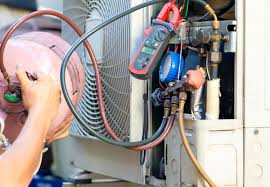
- Refrigerant Charge Testing: Ensuring the system has the exact amount of refrigerant. Under-charged systems freeze up; over-charged systems damage the compressor.
- Electrical Component Audit: Checking the “capacitors” (which store electricity for the startup) and “contactors.” These components often fail during the first heatwave of the year.
- Amperage Draw Analysis: Measuring the electricity used by the blower and compressor motors. High amperage draw is a leading indicator of an impending motor failure.
- Lubrication: Ensuring that all moving parts have reduced friction, which lowers heat and energy consumption.
Indoor Air Quality (IAQ) and Humidity Control
Efficiency isn’t just about temperature; it’s about “sensible” vs. “latent” heat. High humidity makes air feel warmer than it is, causing homeowners to lower the thermostat unnecessarily. A properly functioning HVAC system should maintain indoor humidity between 30% and 50%. In very humid climates, a whole-house dehumidifier can be integrated into the HVAC system. This allows the AC to focus on cooling the air while the dehumidifier manages the moisture, resulting in a more comfortable environment at a higher (more efficient) temperature setting.
Economic Benefits and Warranty Protection
Most HVAC manufacturers (such as Carrier, Trane, or Rheem) require proof of annual professional maintenance to honor their 10-year parts warranties. A single neglected service can void the warranty, leaving the homeowner responsible for thousands of dollars in repair costs. Furthermore, the “total cost of ownership” is significantly lower for a well-maintained system. Preventative maintenance costs a fraction of an emergency “after-hours” repair and delays the multi-thousand dollar expense of a full system replacement.
Conclusion
Maximizing HVAC efficiency is a multi-faceted discipline that requires attention to mechanical cleanliness, airflow dynamics, and modern control technology. By viewing the HVAC system as a holistic “breathing” entity rather than a simple appliance, homeowners can drastically reduce their ecological footprint and utility expenses. Whether it is through the simple act of changing a filter or the technical necessity of an annual professional audit, maintaining peak efficiency ensures that your home remains a sanctuary of comfort regardless of the weather outside. In the long run, the most efficient HVAC system is the one that is never allowed to fail. Investing in its maintenance is an investment in the comfort, safety, and financial health of your household.