In a dramatic escalation of Middle East tensions on February 28, 2026, multiple Gulf Arab states that host United States military assets came under attack by Iranian forces in retaliation for a large‑scale strike by the United States and Israel against Iran.
Background: US–Israel Strikes Spark Iranian Response
The most recent flare‑up began after coordinated U.S. and Israeli air and missile strikes targeted strategic sites deep inside Iranian territory earlier in the week, prompting Tehran to vow a forceful counterattack. Iran’s Islamic Revolutionary Guard Corps (IRGC) announced that all U.S. and Israeli military targets in the region were now “legitimate targets,” signaling a major shift toward direct confrontation.
Gulf Targets and Military Assets Hit
According to official sources cited by Al Jazeera, missiles were launched from Iran toward several Gulf states known to host U.S. military facilities:
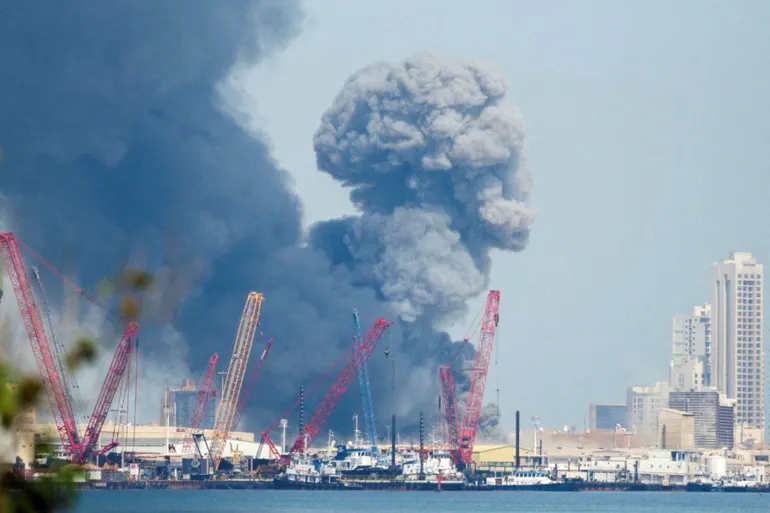
Bahrain – The U.S. Navy’s Fifth Fleet headquarters in Manama was struck, raising alarms about the security of American naval assets in the region.
Kuwait – Explosions were reported near the U.S. Army’s Ali Al Salem Air Base, a key logistics hub.
Qatar – Iranian missiles targeted military areas including the Al Udeid Air Base, which supports U.S. Central Command operations. Qatar’s defence ministry said multiple attacks were intercepted.
United Arab Emirates (UAE) – Explosions were heard in Abu Dhabi and Dubai as air defences engaged incoming missiles. At least one civilian was reported killed from falling debris after intercepts.
These strikes triggered airspace closures in Qatar, Kuwait, and the UAE as aerial defence systems worked to intercept missiles and protect urban centres and critical infrastructure.
Regional and Civilian Impact
Although the missile barrages were largely intercepted by advanced Gulf defence systems, there were civilian casualties and property damage reported, particularly in the UAE. In Abu Dhabi, at least one person was killed after debris from intercepted missiles fell in a residential area.
Airlines were forced to reroute or halt flights temporarily due to the closure of key airspace sectors over the Gulf, underscoring the broader disruption to civilian life beyond strictly military targets.
Political Reactions and Condemnation
Governments across the region condemned the attacks. Bahrain’s leadership called the missile strike on U.S. naval facilities a “treacherous attack” and a violation of sovereignty. Gulf Cooperation Council (GCC) states reiterated their right to defend their territories and citizens.
Saudi Arabia, the UAE, and other regional actors publicly denounced the escalation, warning of serious consequences should hostilities continue to widen. The Omani government, which had been serving as a diplomatic intermediary in earlier talks, notably was not targeted, according to reporters.
International Tensions and Future Outlook
The conflict now extends beyond a bilateral confrontation between Iran and Israel or the United States. It has drawn in multiple Arab states whose territories host U.S. forces, raising fears of a broader regional conflict. The United Nations and global powers have called for restraint, while on‑the‑ground military responses remain active.
With airspace closing, civilian safety at risk, and diplomatic channels under strain, the situation in the Gulf is volatile and fluid — and its implications could reshape regional security dynamics for years to come.